Showing posts with label martini and rossi dry. Show all posts

Wednesday, April 3, 2019

373. West India Cocktail


My interpretation:
  2 oz Martini & Rossi Extra Dry
  2 dashes Angostura Bitters
  2 lemon peels (for the shaker)

Fill mixing-glass with ice, shake, strain into cocktail glass, serve. — This recipe is first found in Straub 1913; from there it makes its way to JM 1916. McElhone has a related West Indian Cocktail built in a tumbler with sugar, Angostura, gin, lemon juice, and ice. This stronger drink is reproduced by Craddock as well. Though featuring a different base, these drinks indicate that the West India was visually conceived, at least, as a lowball drink, and ought properly to be presented as such here. The Old Waldorf Bar Days recipe splits the difference, half Tom gin and half dry vermouth, with Angostura or (any other) West India bitters available; in which recipe no sugar is added, the Old Tom being sweeter already. This drink is stirred rather than shaken, and though not specifying the tumbler or lowball glass, this instruction may hint at as much.

Monday, April 1, 2019

371. Webster Cocktail


My interpretation:
  1 oz Plymouth Gin
  0.5 oz Martini & Rossi Extra Dry
  0.25 oz Rothman & Winter Orchard Apricot
  0.25 oz fresh lime juice

Shake well (30 seconds suffices to achieve good consistency, strain into cocktail glass, serve. —  The first thing to notice about this delicious Martini riff augmented by discreet portions of Apricot and lime, is that the math is all wrong. Jack may have meant percentages of 2 oz (a grown man’s drink), making this a larger drink than usual (i.e., 2.6 oz + dilution). However, I think it quite instructive to refer to the Savoy Cocktail Book (1930) here, the putative source, which calls for the proportion outlined above in my interpretation. This leads us to conclude that there is here a typo in the second line, and that apricot brandy should read 20%, not 50%. Of course, in type the characters are approximately mirrored along a horizontal axis. That would put us at 2 oz plus about 1 tsp., well within cocktail glass capacity of the time after dilution.

Saturday, March 30, 2019

369. Watkins Cocktail


My interpretation:
  1 oz Tinkerman’s Gin (Sweet Spice)
  0.5 oz Cocchi Vermouth di Torino
  0.5 oz Martini & Rossi Extra Dry
  1 slice pineapple in mixing-glass
  1 slice orange in mixing-glass

Fill mixing-glass with cracked ice, shake, strain, serve. — This fruit-laced Perfect Martini recipe, first appearing in JM1912 bears a close resemblance to the later Straub’s Waldorf Queen[’s] (see above) added in 1916—which might stand out more if the Old Waldorf Bar Days recipe for the Waldorf Bronx (2:1 gin to orange juice, with 2 pineapple slices) had been followed.

Thursday, March 21, 2019

360. Van Zandt Cocktail

My interpretation:
  1 oz Castle & Key London dry gin
  1 oz Martini & Rossi extra dry vermouth
  1 dash Rothman & Winter apricot liqueur

Fill mixing-glass with ice, shake, strain into cocktail glass, serve. — This martini + apricot first appears in JM 1908 as a shaken drink, but is reproduced in Straub as a stirred one. Apparently a man named Van Zandt ordered them frequently enough to get them included in Grohusko’s repertoire. It is absent from other cocktail books.
  

Sunday, March 17, 2019

356. U. C. Cocktail

My interpretation:
  1 oz Castle & Key London Dry Gin
  1 oz Martini & Rossi Extra Dry Vermouth
  1 dash St. George absinthe verte

Fill shaker with ice, shake about 30 strokes, strain into cocktail glass, serve. — This shaken Martini+absinthe recipe first appears in Straub 1913 without a hint as to the source of the name.
 

Thursday, March 7, 2019

346. Trilby Cocktail


My interpretation:
  1 oz Castle & Key London Dry Gin
  1 oz Martini & Rossi Sweet Vermouth
  1 dash Regan’s Orange Bitters
  1 dash Angostura aromatic bitters
  2 barspoons Rothman & Winter crème de violette

Fill mixing-glass half full with ice, stir well (20-30 seconds), strain into cocktail glass, add cherry, add crème de violette carefully so that it settles in a clear layer at the bottom of the glass. — Of all the recipes going by the name Trilby, this one may be the most perplexing, due to the fact that the specific gravity of the concoction is not high enough to support a crème of any kind on its surface. This cannot be traced back further than JM1916. Straub 1913 has the recipe but calls only for a 1/6 jigger of Crème Yvette and does not specify floating or layering of any kind. He also uses Old Tom gin (that is usually the source of Grohusko’s generic term “gin,” and indeed it is supported by earlier editions calling for Tom gin). McElhone’s 1927 recipe replaces the Old Tom gin with scotch and the
Crème Yvette with Parfait d’Amour. The Old Waldorf Bar Days (1931) keeps (or rather, is the source of) Grohusko’s recipe, without specifying float or layering of the Crème Yvette, thus confirming the propriety of laying the blame at the feet of Grohusko (or whoever was his direct source).


Tuesday, March 5, 2019

344. Tiptop Cocktail


My intepretation:
  2 oz Martini & Rossi Dry Vermouth
  4 dashes DOM Benedictine
  3 dashes Regan’s Orange Bitters
  1 dash Angostura aromatic bitters

Shake with ice, strain into cocktail glass, serve. — This light, vermouth-based drink appropriate for any time of day, first appears in print in Straub 1913, from which it is borrowed for JM1916. The drink probably originates with the Old Waldorf bar. The 1931 publication of the manual includes this recipe with the following differences: 2 dashes Angostura (not 1), no orange bitters, stirred (not shaken), lemon twist.


Sunday, January 13, 2019

293. Raphael Cocktail


My interpretation:
  1 oz Dubonnet (or Saint-Raphaël) aperitif
  0.75 oz Martini & Rossi Extra Dry
  0.25 oz Plymouth Gin

Fill mixing-glass with broken ice, stir, strain into cocktail glass, serve. — This Dubonnet treatment of the Saint-Raphaël aperitif resembles the Dubonnet cocktail proper. It first appears with the angelic elixir in JM 1910, substituting Dubonnet in 1916; the rest of the recipe remaining unchanged through 1933. A Raphael Cocktail does not appear in the usual cocktail books of the period; it may have come directly from the producer.


Thursday, August 23, 2018

150. Gibson Cocktail

My interpretation:
  1 oz Castle & Key London Dry
  1 oz Martini & Rossi Extra Dry

Stir in mixing-glass half-full of ice, strain into cocktail glass, serve. — Jack lifts this Martini riff recipe, supposedly from San Francisco, probably from Straub 1913/1914 for his 1916 edition of the Manual. It is previously found in Boothby’s 1908 book, where he states “No bitters should ever be used in making this drink, but an olive is sometimes added.” In the Savoy Cocktail Book it is garnished with expressed lemon.

Monday, August 20, 2018

147. Frankenjack Cocktail


My interpretation:
  1.0 oz Castle & Key London Dry
  0.75 oz Martini & Rossi Dry
  0.5 oz Cointreau
  0.25 oz Rothman & Winter Apricot 

Combine in shaker 1/2 full of ice, shake well (20 seconds), strain into cocktail glass, serve. — This drink can be memorized proportionally as 1/2/3/4  ACDG, alphabetical order in numerical order.
 

Tuesday, August 14, 2018

142. Fourth Degree Cocktail

My interpretation:
  0.75 oz Copper & King’s Absinthe Blanche
  0.75 oz Martini & Rossi Extra Dry
  0.75 oz Cocchi Vermouth di Torino

Shake with ice about 30 seconds, double strain into cocktail glass, serve. — This recipe comes to JM 1916 from Straub 1913. The Savoy Cocktail Book recipe has equal parts dry vermouth, sweet vermouth, and gin, with only 2 dashes of absinthe. This seems more accessible. Nevertheless, the present recipe is itself more accessible than the Duchess above, the only difference being the specified absinthe. In the Duchess, I used St. George Absinthe Verte. Here, since it called for white, I used the Copper & King’s absinthe alembic blanche, which is noticeably smoother and harmonizes better with the vermouths.
 

Friday, July 27, 2018

123. Duplex Cocktail

My interpretation:
  1 oz Old Forester Signature
  0.5 oz Martini & Rossi Extra Dry
  0.5 oz Cocchi Vermouth di Torino

Stir in mixing-glass with ice, strain into cocktail glass, and serve. — A perfect Manhattan, hold the bitters, first appearing in JM 1916. A Straub 1913 recipe (identified as an alternate of the “Albern”) is, somewhat more logically, equal parts dry and sweet vermouth with two dashes of orange bitters. The Old Waldorf-Astoria Bar Book uses the same recipe, specifying as alternative to orange bitters two squeezes of orange peel.

Thursday, July 26, 2018

122. Duke Cocktail


My interpretation:
  1.5 oz Gin Lane 1751 London Dry
  1 oz Martini & Rossi Extra Dry

Fill mixing-glass with ice, stir, strain into cocktail glass, serve. — This cocktail, essentially a gin-heavy Dry Martini (see above), appears first in Straub 1913 as a 2:1 High & Dry to Dry Vermouth. JM 1916 reproduces this with the slight variation of proportions as seen here, rounding the 66:33 to 60:40 and thereby slightly upping the Vermouth component, but not significantly. The Savoy Cocktail Book features under the name “Duke” a cocktail almost entirely different, except that it also contains Dry Vermouth; neither is there any apparent relationship to the Duchess Cocktail (also above).
 

Friday, July 20, 2018

116. Dorr Cocktail


My interpretation:
  1.5 oz Hawthorn’s London Dry Gin
  0.75 oz Martini & Rossi Dry Vermouth
  0.25 oz Dolin Rouge

Fill mixing-glass half-full of fine (chipped) ice, shake, strain into cocktail glass, garnish with orange peel; serve. — A cold, diluted perfect martini riff, easy on the sweet vermouth, unchanged from its first appearance in JM 1908.
 

Wednesday, July 18, 2018

114. Devil's Cocktail


My interpretation:
  2 oz Martini & Rossi Extra Dry Vermouth
  0.25 oz homemade Devil Bitters mixture

Fill mixing-glass with broken ice, stir, strain into cocktail glass, serve. — Devil Bitters apparently refers to Fred Kalina’s Stomach Devil-Cert Bitters, formerly produced in Pittsburgh, Pennsylvania (Fred seems to have been of Bohemian extraction; the word “cert” means devil). While many empty bottles for this bitters can be found among private collections, the recipe, apparently a 70-proof digestive bitter, is not recorded and there is no known emulation of this specific concoction. I present my own interpretation, assuming by its name that it featured a mild tincture of piquant ingredients common at the time. Thus I have combined Fee Brother’s Cardamom Bitters, Underberg’s stomach bitters, and a small but powerful tincture of cayenne and sweet paprika in neutral spirit, melded by means of a little gum syrup. The effect is not unpleasant, but rather savory and medicinal. One notes that the Devil’s and Diabolo cocktails from the Savoy Cocktail-Book are quite different.
 

Tuesday, July 17, 2018

113. Delmonico Cocktail


My interpretation:
  1.5 oz Hawthorn’s London Dry Gin
  1.5 oz Noilly Prat or Martini & Rossi Dry Vermouth

Shake, strain, serve in cocktail glass, garnish with orange peel. — This recipe seems to come from Straub 1913. The standard cocktail by this name currently contains a portion of Cognac or Brandy in addition to Gin and Dry Vermouth. The Old Waldorf-Astoria Bar Book (1935) has two orange peels and adds a dash of Orange Bitters but no brandy. Here are two presentations of this recipe:


Thursday, July 12, 2018

108. Cris Cocktail


My interpretation:
  1.25 oz Hawthorn’s London Dry Gin
  1.25 oz Martini & Rossi Extra Dry Vermouth
  2 dashes Luxardo Maraschino

Fill mixing-glass with broken ice, stir, strain into cocktail glass, and serve. — This counterpart to the Christie, a JM standby from the start, and thus another 50/50 stirred martini riff, has maraschino substituted for the Peychaud’s Bitters.
 

Saturday, July 7, 2018

103. Cornell Cocktail

 My Interpretation:
  1.25 oz Castle & Key London Dry Gin
  1.25 oz Martini & Rossi Extra Dry Vermouth

Shake with ice 10 seconds, strain, serve. — This very simple “shaken martini” Duo riff, borrowed from Straub 1913, bears little resemblance to the more famous Cornell Cocktail, which the Savoy Cocktail Book calls the Cornell Special (with Gin, Benedictine, and Lithia water, i.e., Gerolsteiner).


Wednesday, May 23, 2018

56. Bronx Cocktail


My interpretation:
  1.5 oz St. George Botanivore
  0.75 oz Gallo Extra Dry
  0.75 oz Martini & Rossi Rosso
Jack’s Manual (1908)
  2 T fresh orange juice

Fill mixing-glass with ice, shake, and strain. — A classic cocktail for the 1899 inauguration of the Bronx Zoo, this drink went through a little mutation during the Sad Era. In the 1908 and 1916 (it is mysteriously absent from 1910), we have no juice but a twist of orange or, in Straub a “piece of orange.” 

Only in 1933 does Jack’s Manual get the juicy version so famous today (pictured below).
 

Monday, May 14, 2018

47. Bogerz Cocktail


My interpretation:
  2.25 oz St. George Botanivore
  0.75 oz Martini & Rossi Extra Dry
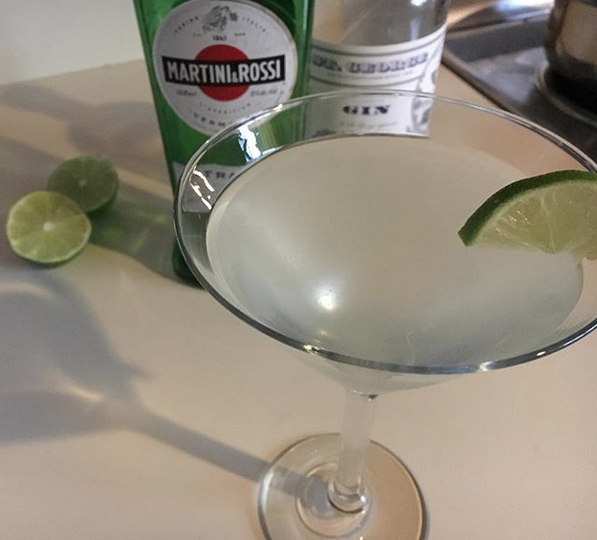
  1 T fresh lime juice.

Fill mixing-glass with broken ice, stir, strain, serve. Garnish with half slice of lime. — This drink first appears in Jack’s 1910 manual. It differs from the Bronx Terrace in proportion and method of preparation (stirring instead of shaking).
 

Turning the Page

Greetings! We have come to the end of the Cocktails section from Jack’s Manual (1933). In the process of our study, we have discovered so...